

Mass Finishing Equipment at Kramer Industries Inc Home Contact Us Blog ShopTalk Search About Us Home
Right From The Start - Call us at 1-888-515-9443
No Added Fee Guarantee
The Finished Part Blog

Thursday, January 26, 2012

Silica and OSHA


The Occupational Safety and Health Administration (OSHA) is in final preparations for a hazard communication related to a Occupational Exposure to Crystalline Silica. This rule will basically set standards for exposure to silica dust during blasting (and other operations) in confined work spaces. Inhalation of silica is generally considered to increase the risk of silicosis.

According the OSHA, in 2005 "silicosis was identified on 161 death certificates as an underlying or contributing cause of death. Exposure to crystalline silica has also been associated with an increased risk of developing tuberculosis and other nonmalignant respiratory diseases, as well as renal and autoimmune diseases." The need for the exposure standard is the standardize monitoring, training for use with silica and compliance.

Of course, in an abrasive blasting environment the best way to avoid the hazards of silicosis is to use media that do not contain crystalline silica such as Crushed Glass Grit.

Thursday, January 19, 2012

Surface Finishing Aluminum


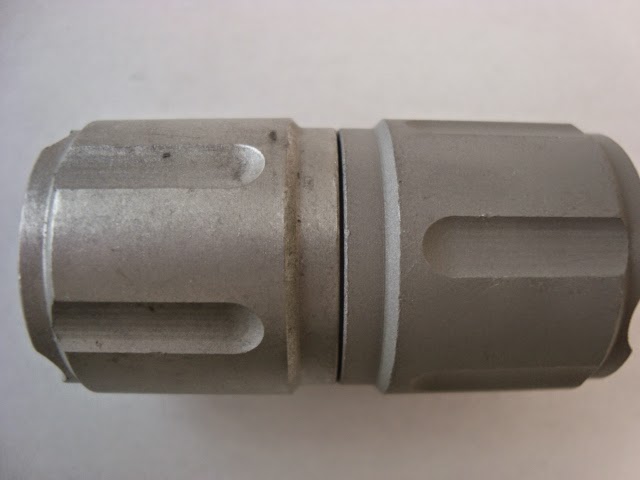
Aluminum parts that are stamped, molded. extruded, saw-cut, etc. all need to be deburred. These parts also typically need a specified surface finish. While dense, aggressive media like Ceramic Media will deburr the parts, the matte, tumbled finish and heavy edge rounding is often unneeded.

Softer metals like aluminum tumbled with lighter medias like Plastic or Synthetic Media can result in lightly deburred edges and a smooth surface finish. The part above (before part on right, deburred part on left) was vibratory tumbled with a Plastic Triangle media for only 1 hour. The smooth, matte finish is ready for accepting a coating or anodizing.

Wednesday, January 11, 2012

Blasting Patterns


There are many different methods and patterns for blasting flat surface areas. Many of these process (including the Overlap Method pictured above) can result in over-blasting of a large percentage of the surface. This can lead to increased amounts of media used and an inconsistent surface finish (especially with softer surfaces such as log homes).

One alternative is the use a '50% Gap Method' (see picture below). Basically this process involves blasting horizontal strips of the surface leaving about a 50% gap in between each strip. You can then go back over the gap areas resulting in more surface area blasted per unit time and less overlap.


Thank you to Pirate Brand for this blasting tip.

Wednesday, January 4, 2012

Cleaning Paint Plugs


When painting large quantities of parts - especially on a production line - it is common to use plugs and masking materials to prevent paint from being coating on unwanted areas. These materials are often made of flexible materials such as silicone, urethane and rubber in order to make it easier to plug the holes or slots or whatever area needs to be protected. Often, these plugs are discarded after a few uses as the coating builds up on the surface.

Removing the paint off the plugs allows for a longer lifetime of the plugs and significant cost reductions. Many companies will simply roll the plugs on a hard surface to remove the paint or knock them with hammer or similar. Since the plugs are typically flexible, it is difficult (but not impossible) to use a mass finishing process such as vibratory tumbling to get the uneven forces (i.e., rolling on a surface) necessary to knock the coating off. In addition, vibratory tumbling is often done wet so the plugs would need to be dried prior to re-use. Of course, this type of process eliminates the hand cleaning one part at a time.

Abrasive blasting is another process that can be used to strip the paint. On hard rubber plugs and similar, this process works very well especially in a tumble blast system. On more flexible parts, the results vary widely as the media can simply 'bounce' off the surface. The success pictured above was a simple blast cleaning with Walnut Shell Grit to completely strip the paint.

The type and thickness of the coating and the flexibility of the part are important factors when trying to determine whether blasting or tumbling will properly remove the coating. Testing of the parts is typically needed to determine the viability of cleaning re-using the plugs.

Thursday, December 29, 2011

Blast Nozzle Size

Question: Do you have a chart which shows the minimum pressure blaster nozzle size required for each of the mesh sizes of blast media?

Response: A reasonable guideline for proper media flow would be to use a nozzle bore size that is 7-10 times the average particle size of the abrasive blasting media you are using.

Note: See Mesh and Micron post to get a rough formula to convert from one identification to the other.

 
  • Buy Now! at www.KramerDepot.com
  • Finishing Products and Services
  • Barrel Finishing Systems
  • Vibratory Finsihing Systems
  • Blasting Systems
  • Abrasive Blasting Media
  • Tumbling Media
  • Chemical Compounds
  • Parts Separating Systems
  • KramerThinksGreen
  • Finishing Guides
  • Applications
  • Newsworthy
  • Repairs and Services
  • Material Safety Data Sheets
  • Catalog
  • Ordering Information
  • Guarantee
  • Newsletter. Sign Up Today!
  • Customer Support
  • We specialize in customizing systems, products and procedures. There are many options and custom systems available. If you don't see something on our web site, please contact us.

    1-888-515-9443